
SOAR Challenge: Power Hands

Force Generation • Hip Rotation • Striking Precision
Challenge Due: Tuesday, September 29, 2026.
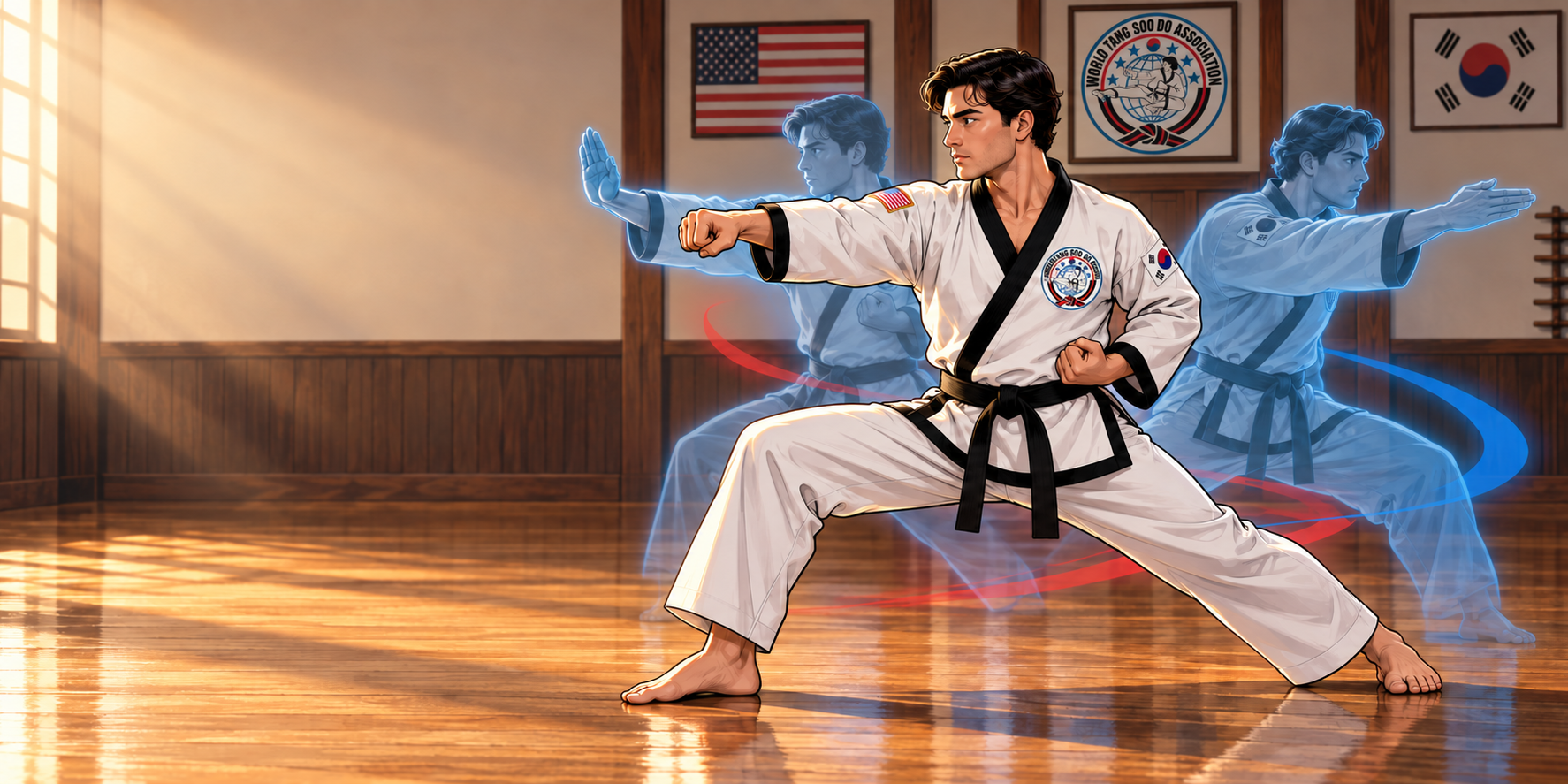
A strong hand technique begins before the hand moves. Your stance provides support. Your hips and trunk coordinate the movement. Your hand arrives at the intended target, and your recovery prepares you for the next technique.
This week, practice the hand strikes you have already learned. Make every repetition complete: preparation, delivery, and recovery. Power Hands includes more than just punching. It includes chops, ridge hands, back fists, and more.
Coach’s Tips
- Warm up with easy movement and slow rehearsal of the techniques you will practice.
- Use only techniques already taught in class. Your instructor selects appropriate variations; this challenge does not introduce new belt requirements.
- Begin with a stable stance. Coordinate the hips and trunk with the strike without twisting a planted knee or losing balance.
- Keep the wrist aligned for the chosen technique and use its taught striking surface. Recover to the prescribed chamber or guard.
- In the air, control the finish without snapping the elbow into a hard lock. Begin slowly and add speed only while alignment remains dependable.
- Exhale naturally with the effort. Relax unnecessary tension between repetitions.
- One completed strike and recovery counts as one repetition. Count each strike in a combination separately. Train both sides equally.
- Use short sets of 5–10 per side, resting before technique deteriorates. Divide the total across the listed days.
- Contact practice requires suitable pads, instructor guidance, and a prepared holder. Do not strike hard surfaces or another person to complete this challenge. Equipment is not required.
- Reduce speed, range, stance depth, or total repetitions to match readiness. A comfortable upright stance or instructor-approved seated version can be used when necessary.
- Stop for pain or loss of control. Quality overrides quantity.
Why This Matters
Power Hands gives you a specific opportunity to practice coordination between your base, hips, trunk, and striking arm. The objective is repeatable technique: a clear target, controlled delivery, and dependable recovery.
Changing between familiar hand strikes requires attention to each technique’s preparation and striking surface. Do not let every movement become the same hurried swing. Preserve the details that make each technique useful.
Rise Up!
Make the first repetition deliberate. Make the last repetition meet the same standard.
Build speed through control. Build confidence through consistent practice. Help another student recognize one detail that improves the next repetition.
Bronze Tier: White & Orange Belts
100 strikes total: 50 per side.
Practice familiar straight punches over at least three training days: 40 + 30 + 30. Split each day’s total equally between sides.
Focus: stable stance, aligned wrist, controlled extension, and complete recovery.
Silver Tier: Green & Brown Belts
200 strikes total: 100 per side.
Practice over at least four training days: 50 each day. Use two instructor-selected hand-strike types you already know. Complete 100 of each type across the challenge, with 50 on each side. Alternate the daily type emphasis as needed to preserve those totals.
Focus: distinguish the striking surfaces and coordinate the hips with each technique.
Gold Tier: Red & Blue Belts
300 strikes total: 150 per side.
Practice over at least five training days: 60 each day. Use three familiar hand-strike types: 100 of each type across the challenge, 50 per side. Each day, complete 20 of each type, divided equally between sides.
Link familiar techniques in controlled two-strike combinations during part of the work. Each strike counts separately; combinations add no extra repetitions.
Focus: smooth transitions, correct striking surfaces, balance, and immediate recovery.
Master’s Tier – Black Belts
300 strikes total: 150 per side, over at least five training days: 60 each day.
Use three familiar hand-strike types equally, as in the Gold Tier. Include 60 slow precision repetitions, 30 per side, within the 300. Use the remaining repetitions for purposeful combinations with controlled speed and recovery. Do not treat air practice as maximum-impact work.
Coach one student on alignment, hip coordination, and recovery. Demonstrate a correction, observe the student’s next attempt, and give one specific piece of useful feedback.
Focus: technical excellence, adaptable combinations, and leadership through patient instruction.
Weekly Challenge Reminder
Record your repetitions by technique and side. Complete the version appropriate for your readiness. Challenge due by Tuesday, September 29, 2026.
Complete the challenge. Encourage another student. Grow stronger together.
Your Attitude Determines Your Altitude. SOAR!


