
SOAR Challenge: Iron Chamber II

Hip Strength • Active Range • Kicking Control
Challenge Due: Tuesday, November 3, 2026
The first Iron Chamber Challenge emphasized the ability to establish and hold a dependable side-kick chamber. Iron Chamber II asks you to control what happens next.
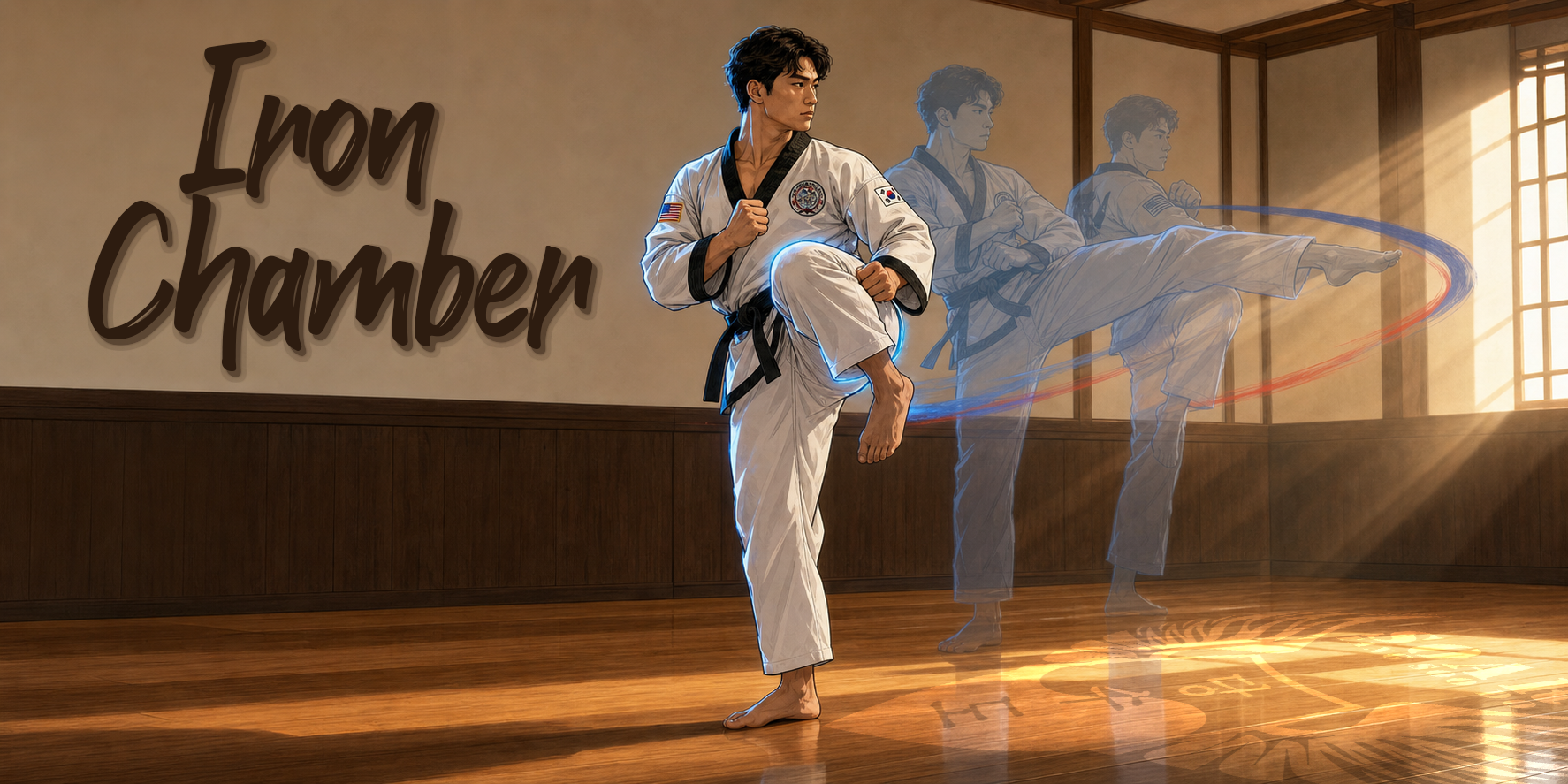
Each repetition begins in a balanced side-kick chamber. From that position, extend the kicking leg slowly, pause without locking the knee, draw the heel back into the same chamber, and return the foot to the floor under control. The repetition is complete only when balance and posture have been recovered.
The goal is not maximum height. It is active strength through a range you can control. Keep the chamber recognizable, direct the heel toward the target, pull the toes back, and make the extension and rechamber follow the same deliberate path.
Remember: students must complete six weekly challenges during each testing cycle.
Coach’s Tips
- Use a clear, nonslip training area. Keep a wall, chair, barre, or other stable support within reach when needed.
- Warm up with easy movement, ankle and hip motion, controlled knee lifts, stance transitions, and several low practice chambers before beginning the assigned work.
- Practice only the side-kick mechanics already taught by your instructor. This challenge develops control.
- Establish balance on the supporting leg before lifting the kicking knee. Keep the supporting knee softly flexed rather than locked.
- Turn the supporting foot as needed for the side kick. Do not force the supporting foot to remain trapped while the hips and kicking leg turn.
- In the chamber, keep the chambered knee and heel directed toward the target. Keep the torso upright and the hands in a disciplined guard.
- Extend by pressing the heel toward the target. Pull the toes back toward the knee and keep the foot appropriately aligned for the taught side-kick striking surface.
- Stop the extension before the knee locks or the torso must lean, twist, or collapse to create more height.
- Rechamber along the same controlled path. Do not allow the leg to drop or swing before returning the foot to the floor.
- One repetition is: chamber, controlled extension, pause, controlled rechamber, and balanced return. Train both legs equally.
- Work at a low or middle height until control is dependable. A lower technically correct kick is better than a higher kick created by leaning, twisting the supporting knee, or losing guard.
- Light fingertip support is permitted at every tier. Reduce height, tempo, repetitions, or sets whenever readiness requires it.
- Stop for sharp pain, joint pressure, numbness, tingling, dizziness, or unsafe loss of balance. Quality overrides quantity.
Why This Matters
Holding a chamber develops balance and isometric strength. Slowly extending and rechambering the leg adds active range and control through motion. The supporting leg must stabilize, the hips must organize the kick, and the trunk must remain dependable while the kicking leg changes length.
This work also exposes the difference between flexibility and usable kicking range. A student may be able to place the leg high with momentum but lack the strength to extend, pause, and return at that height. Iron Chamber II trains the range that can be controlled without borrowing movement from the torso or sacrificing the supporting knee.
The rechamber matters as much as the extension. A controlled return prepares the practitioner to set the foot down safely, repeat the kick, or continue moving without falling out of position.
Rise Up!
Do not chase height. Build ownership. Lift with balance.
Extend with purpose. Rechamber with discipline. Return ready.
Bronze Tier: White & Orange Belts
Complete three sessions on separate days.
During each session, complete 2 sets of 5 repetitions per leg—20 repetitions per session and 60 for the week.
- Hold the initial chamber for one second.
- Take approximately two seconds to extend, pause briefly, and take two seconds to rechamber.
- Set the foot down and reestablish balance after every repetition.
- Use stable hand support and a low kicking height whenever they improve alignment.
Focus: Learn the complete path, preserve the chamber, and finish every repetition in balance.
Silver Tier: Green & Brown Belts
Complete four sessions on separate days.
During each session, complete 2 sets of 6 repetitions per leg—24 repetitions per session and 96 for the week.
- Hold the initial chamber for two seconds.
- Take three seconds to extend, pause for one second, and take three seconds to rechamber.
- Keep the supporting knee softly flexed and the guard organized throughout the repetition.
- Match the controlled height and range of the right and left sides whenever mobility permits.
Focus: Bilateral strength, slow extension, consistent heel direction, and a complete controlled rechamber.
Gold Tier: Red & Blue Belts
Complete four sessions on separate days.
During each session, complete 3 sets of 6 repetitions per leg—36 repetitions per session and 144 for the week.
- Use a three-second extension, two-second pause, and three-second rechamber on every repetition.
- During the final set, hold the recovered chamber for two additional seconds before returning the foot to the floor.
- Maintain the same posture, guard, foot alignment, and supporting-leg control as fatigue develops.
- Use only a height at which the knee can remain unlocked and the torso can remain upright.
Focus: Active range, sustained control, precise rechambering, and technical consistency under fatigue.
Master’s Tier: Black Belts
Complete the Gold Tier workload with different kicks and lead through technical excellence.
- Set One: Side Kick
- Set Two: Roundhouse
- Set Three: Front Kick
- Complete one assessed set during the week. Ask a qualified practitioner to observe the supporting foot, supporting knee, torso, guard, chamber alignment, heel direction, extension, and rechamber—or record specific self-observations immediately afterward.
- Complete one contrast set on each leg: three repetitions at a deliberately low height and three at the highest height that preserves identical posture and control. The higher range is acceptable only when the technique remains unchanged.
- Coach one student through a readiness-appropriate set. Help the student improve one specific relationship among the chamber, heel, supporting foot, posture, and rechamber without increasing height prematurely.
Focus: Honest control through usable range, refined technical judgment, and leadership through patient instruction.
Record the date, sets completed, repetitions per leg, support used, and the highest range at which you could preserve the complete sequence. Count only repetitions that include the chamber, controlled extension, pause, controlled rechamber, and balanced return.
A student may use a lower tier, reduced height, light support, or lower volume regardless of belt rank when that choice preserves safe, technically recognizable movement.
Complete the challenge.
Encourage another student.
Grow stronger together.
Your Attitude Determines Your Altitude. SOAR!


