
SOAR Training: One-Steps (Soo Ki / Jok Ki)
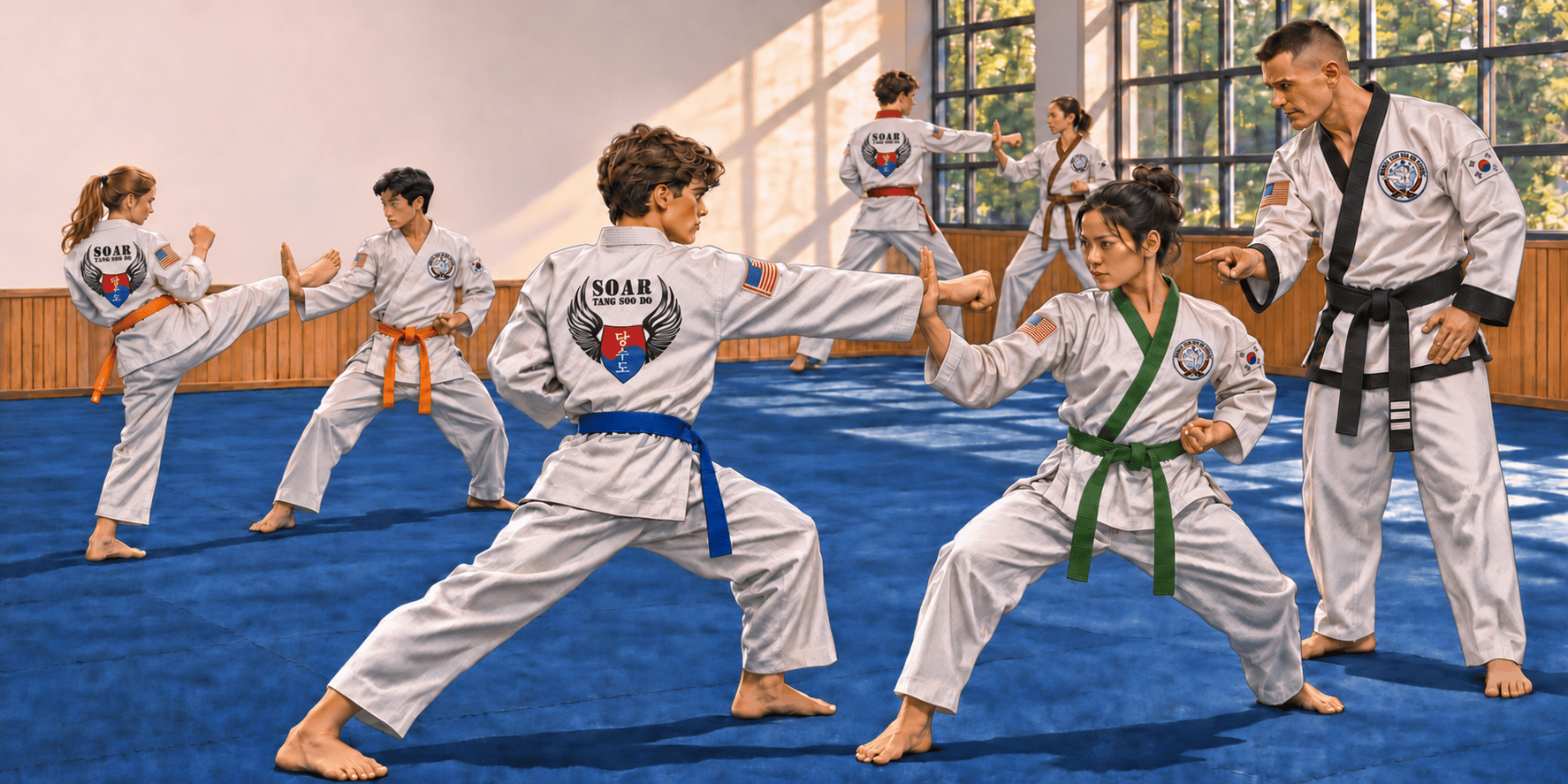
This week we return to One-Steps: Soo Ki for hand techniques and Jok Ki for kicking techniques.
One-step training is cooperative practice. The attacker provides a clean, predictable feed so the defender can recognize the line, move to a safer position, apply the assigned response, and finish under control. Both partners are responsible for the quality and safety of every repetition.
We will begin slowly. Before adding pace, we will establish the attack line, confirm starting distance, and agree on the target plane. Soo Ki practice will emphasize chamber, stance, angle, and controlled counter lines. Jok Ki practice will add supporting-foot position, guard, extension, recoil, and balance.
Speed is not the first measure of success. Ask better questions: Did I wait for the attack? Was the feed consistent? Did I move far enough to improve my position? Did my counter stop on the correct line? Could both partners reset immediately and repeat the same lesson?
Come ready to work with a partner, communicate clearly, and accept correction. Partner drills will remain supervised and controlled.
School App: DojangFlow
All students and parents must be registered in DojangFlow so they can track attendance, monitor progress, and complete required written tests. Use the Learning Center this week to review rank-based written-test questions, basic Korean, and WTSDA tournament rules. Future rank written tests will be administered there, and updated Study Guides are on DojangFLow under Resources > School Resources.
Existing students and parents: Open DojangFlow
Prospective new students: Register for SOAR Tang Soo Do
If you do not have access, ask Mr. Calvert for another invitation email.
Weekly Conditioning
This week’s take-home plan uses strength, endurance, mobility, stance work, guarded footwork, and solo one-step rehearsal to support distance, recognition, kick recoil, and controlled partner practice. Use the page for your rank and adjust the physical load to your current readiness.
Practice slowly enough to keep the sequence accurate and the finish controlled. Outside class, use solo shadow practice. Partner work requires agreed roles, contact limits, clear space, and qualified supervision.
Your Attitude Determines Your Altitude – SOAR!


